A few years ago, I was fortunate enough to see the first Uni-Solar thin
film flexible photovoltaic modules laminated to a single-ply polymeric
roof membrane. I thought the ability to combine a flexible photovoltaic
module with a flexible roofing membrane was a brilliant idea.
As a roof consultant, over the years I have seen quite a few rack
mounted photovoltaic arrays on roofs, and I have always thought there
has to be a better way to place solar on roofs. Don't get me wrong,
mounting rack supported solar glass modules on a roof if done properly
does work, but roof-mounted arrays can have drawbacks. On large
commercial roofs, many times you are adding hundreds of new roof
penetrations and more weight to the roof and building structure, making
the roof harder to maintain and in some cases reducing the roof's
service life. On other roofs, you see the latest rack array solar
systems with an expected service life of 30-years mounted on a roof that
at best would have five to ten years of performance left. Sometime in
the future, the solar array will have to be disassembled, the roof
replaced, and the solar array re-installed. The fact is, in the US, the
average built-up roof has a performance life of 15-years, and at some
future date, the roof will be repaired or replaced long before the solar
modules stop working.

Solar contractors who install roof mounted array systems are
sometimes unaware of roof warranties by most US roof manufacturer that
requires the owner to notify the roof system manufacturer of any use
changes on the roof. If an owner adds a PV array system to a roof, they
are voiding the roof guarantee if they do not contact the roof
manufacturer prior to installing the array. The roof manufacturer
requires all modifications and repairs to the roof be completed by a
manufacturer certified contractor, using their approved details and
specifications. A roof leak or repair call in the future to the roof
manufacturer can end up costing the owner if they have not completed all
the notification requirements in the guarantee. Remember, roof
guarantees exist for two reasons: one they are a selling tool and they
exist to protect the manufacturer, not the owner.
The flexible photovoltaic roof system originally developed by Solar
Integrated Technologies uses flexible thin film modules made by Uni-Solar
combined with a good polymeric roofing system made by Sika-Sarnafil and
has performed very well over the past several years. Brilliant as this
concept is, the Solar Integrated solar roof system still has
limitations. Polymeric membrane roofing systems made from PVC or TPO
account for 20% of the commercial roofing membrane market. The majority
of commercial roofing still uses asphalt based roofing technologies in
the form of conventional built up roof systems and single-ply APP or SBS
asphalt roof membranes and the only option is to install a new
photovoltaic roofing membrane system over them. Other problematic roof
systems include elastomeric rubber roofs made from EPDM and Hypalon.

The Solar Integrated PV roof system works well on new construction
projects, but what about re-roofs? The SIT solar roof system is good for
a old worn out roof that must be replaced, but what about a relatively
new roof, one that is five or ten years old and still under warranty and
not leaking? Do you want to replace the roof? How does the additional
roof replacement cost impact the life cycle and investment cost of the
original roof system? While it’s possible to apply thin film modules
directly to an existing thermoplastic PVC or TPO roof, do you want too?
After all, the flexible PV module has a service life of 25-years, does
it makes sense to apply the modules to a roof with a more limited
service life? What about all of those asphalt based roof systems or EPDM
rubber roofs? You cannot apply flexible thin film modules directly to
them. I thought there had to be another way.

In my research, I talked with several of the new thin film
photovoltaic manufacturers about application solutions for flexible thin
film modules. The most common answer I got back, is their flexible
modules would be used as a building integrated photovoltaic (BIPV)
product for roofs, walls and in glass, but they had no real application
method in mind yet their focus was manufacturing the modules. So how
does one apply these new flexible thin film photovoltaic modules to a
building surface? I wanted a universal application solution, a system
where it would be easy to apply flexible photovoltaics onto any new or
existing building surface, an application solution that would work over
roofs, on walls and other construction surfaces.
One day a few years ago, the idea came to me when I watching an
existing roof being coated with an elastomeric restoration coating. The
roof coating repaired the surface of the roof, creating a new waterproof
surface, made the roof solar reflective and extended the service life of
the roof. The idea was simple; why not combine a flexible thin film
photovoltaic module with a high performance coating, in effect creating
a monolithic membrane system consisting of the coating and the
photovoltaic both waterproofing the roof and generating renewable
energy. I tested the idea, applying flexible PV modules by Uni-Solar and
Iowa Thin Films with different roof coatings to a roof surface and found
these combinations performed very well. During the same time, I started
research to patent this idea and found to my surprise no one had
patented this idea before and this is how SolarSeal Technologies™ came
to be.

The most common exterior finishing system on any building surface is
an elastomeric coating system. Elastomeric coatings are used on roofs,
on walls and over concrete. SolarSeal Technologies evolved into a number
of photovoltaic application solutions for all types of building
surfaces.
SolarSeal PV Roof System™
The SolarSeal PV Roofing System™ (patent pending) takes a complete
new approach to integrating thin film photovoltaic modules onto new and
existing roof systems. The SolarSeal Roof System™ is a simple
application solution. The SolarSeal application system uses proprietary
elastomeric coatings, creating a new waterproof surface over the roof
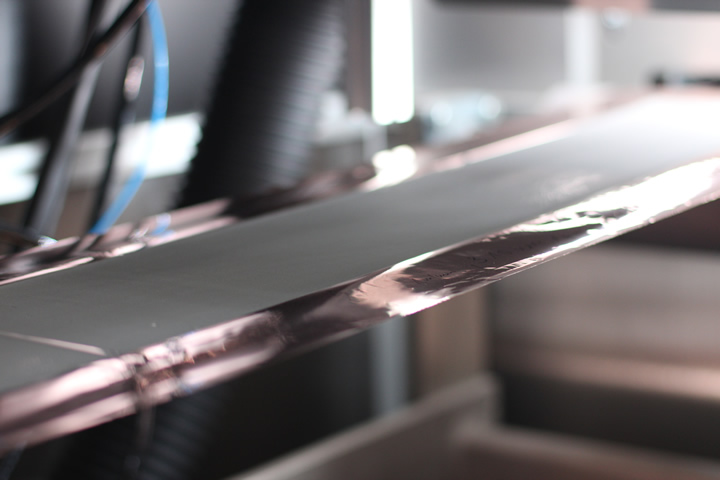
substrate. Structurally flexible thin laminated photovoltaic modules
such as those manufactured by Uni-Solar or Open Energy or one of the
future flexible modules by Miasole’, DayStar or MWOE-Solar can be
embedded into the new waterproofed roofing surface and an elastomeric
top coating with both excellent waterproofing and weatherproofing
characteristics is applied around the PV modules and remaining roof
surfaces.
The SolarSeal PV Roofing System™ creates a new monolithic, seamless,
waterproof, and weatherproof roof surface, capable of generating
renewable energy from the sun. The SolarSeal PV System™ provides the
least expensive and fastest installation method compared to current
photovoltaic roofing systems. The SolarSeal PV Roofing Systemtm goes
directly over any new and existing smooth or gravel surfaced built-up
roof, including smooth or mineral surfaced modified bitumen roofs,
single-ply roofing (Hypalon, PVC, TPO, EPDM, and co-polymer alloys),
polyurethane foam roofs and metal roofs.
The SolarSeal PV Roofing System™ is the perfect solution for existing
roofs that under normal circumstances require a roof tear-off, such as
buildings with two existing roofs or buildings that have structural or
lightweight concrete decks and are difficult to fasten to. The SolarSeal
PV Roofing System™ is the most cost effective system for applying
Flexible photovoltaics over recently installed roofs. The SolarSeal
Roofing System™ is the best solution to convert existing black EPDM
roofs into white energy efficient roofs with the latest flexible
photovoltaic module technologies.
The SolarSeal PV Roofing System™ is a renewable roof system. The
SolarSeal PV Roofing System™ is a sustainable roof system, synchronizing
the roof service life with the long performance life of the photovoltaic
modules.
SolarSeal PV Concrete System™
Concrete is the most widely used construction material in the world.
While the photovoltaic industry has focused on creating a number of roof
based photovoltaic applications, the integration of photovoltaics with
concrete surfaces has remained largely undeveloped
SolarPower Restoration Systems created a (patent pending)
photovoltaic array system combining concrete surfaces with the
protection of elastomeric waterproofing coatings and the solar power
production of structurally flexible thin film photovoltaics.
Concrete is the ideal building material to create basic structural
foundations for scalable power arrays. If you look around, concrete is
everywhere, many large existing concrete surfaces become unused over
time as the facilities use surrounded by these concrete surfaces change.
This includes closed factories, military bases, shopping centers,
distribution centers, parking lots, tennis courts and even abandoned
roads. Many existing facilities and campuses have under utilized
concrete surfaces. New large area concrete slabs are relatively
inexpensive to pour.
SolarSeal™
elastomeric waterproofing coatings are applied to the concrete, sealing
all exposed concrete surfaces. Flexible thin film photovoltaic modules
are embedded into the elastomeric waterproof coating; the photovoltaic
modules are flashed with an additional coating to create a continuous,
seamless, weatherproof and waterproofed surface capable of generating
renewable energy from the sun.
The SolarSeal Technology system offers a number of advantages over
traditional ground-based rack and pole constructed photovoltaic arrays.
The SolarSeal System requires little maintenance; the waterproof
coatings can be renewed, effectively extending the SolarSeal System
service life to 25-30 years or more. SolarSeal PV Concrete Systems are
not impacted by adverse weather conditions such as windstorms,
hurricanes or hail.
SolarSeal Wall Systems™
SolarPower Restoration System’s (patent pending) SolarSeal Wall
System™ integrates thin film photovoltaic technologies with SolarSeal
Coatings™ creating a photovoltaic wall system with new or existing
concrete, masonry, EIFS wall systems and other vertical material
surfaces.
The SolarSeal Wall System™ combines elastomeric SolarSeal Coatings™
that waterproof and seal concrete, masonry and EIFS wall systems with
specially designed flexible thin film photovoltaic modules on a
semi-flexible polymer substrate onto the wall surface forming a
watertight, weatherproof, seamless wall system capable of generating
renewable energy from the sun.

The SolarSeal Wall System can be used with most common wall
construction systems for modern buildings. The SolarSeal Wall System can
be applied to concrete walls (tilt-up wall panels, pre-cast wall panels,
poured concrete, and masonry block walls), framed walls systems ,
structural insulated concrete composite panels and multi-layer wall
systems with an exterior layer of insulation with a synthetic
elastomeric coating that looks like a masonry/stucco surface, called
EIFS (Exterior Insulation and Finish Systems).
The SolarSeal Photovoltaic™ wall modules with the SolarSeal Coating™
system can be combined with conventional wall finishing systems forming
a monolithic waterproofed solar-power system with an unlimited number of
architectural design options.
The
SolarSeal Wall System™ can be applied to other facility/campus
architectural construction and building elements such as landscaping and
terraced walls, tops of parapet walls and a number of other horizontal
concrete and masonry surfaces. SolarSeal Coatings can be supplied in a
wide range of both standard or custom colors and textured surfaces.
In development for 2008 is a magnetic membrane system for metal roofs
and a thin film photovoltaic modules inter-locking panel system, both
systems can be permanently mounted or can be installed as re-deployable
solar array systems. |