
LG Energy Solution Vertech and Qcells Partner to Deliver 5GWh of U.S. Energy Storage Projects
• Agreement provides American-made energy storage projects across a portfolio of utility-scale sites
• Projects are scheduled for 2028-2030
• All projects will meet U.S. domestic content requirements
Distributed Energy Infrastructure Joins the Solar and Farming Association to Support Farmer-Centered Dual-Use Solar
-As a founding board member, the EPC firm brings experience with dual-use solar projects that protect farmland and farm livelihoods
-Farm workers harvest cranberries under solar panels installed by Distributed Energy Infrastructure.
Siemens to Highlight Modernization Solutions at AHR Expo 2026
Visit booth C1731 to explore Siemens' path to human-centric autonomous buildings
Solar Insure Launches SI-Commercial Warranty and Expands Approved Vendor List for Commercial Solar Energy Systems
SI-Commercial is designed for commercial solar systems up to 2 MW DC and delivers long-term protection aligned with the realities of commercial project timelines, ownership structures, and risk profiles.
Solar Photovoltaic (PV) Market to hit $694.5 Billion by 2035
The Global Solar Photovoltaic (PV) Market was valued at USD 323.5 billion in 2025 and is estimated to grow at a CAGR of 8.1% to reach USD 694.5 billion by 2035.
Tigo Energy Next Gen Software-Enhanced GO Battery Now Available in North America
Storage system improvements over the EI Battery enable installation twice as fast, taking up 40% less space, with Virtual Power Plant (VPP) program qualification
Intersolar & Energy Storage North America Unveils Interactive Programming to Enhance Education and Networking
Intersolar & Energy Storage North America, the premier U.S. tradeshow and conference series for solar, energy storage, EV infrastructure, and manufacturing, today announced onsite activities that enhance education, collaboration, and connection at its Flagship event on February 18-20 at the San Diego Convention Center.
Intersolar Africa 2026 to Position Nairobi as East Africa's Key Hub for Solar and Energy Storage
Rapid population growth, industrialization, and rising electricity demand are putting pressure on power systems across East Africa. Limited generation capacity, grid instability, and high electricity costs constrain economic growth.
Sungrow Launches Grid-Forming Utility ESS for Europe's Energy Transition
As Europe accelerates its energy transition, PowerTitan 3.0 addresses key regional challenges-low PPA prices, tightening grid codes, and rising expectations on safety and lifecycle returns-unlocking value across multiple scenarios and delivering EUR 16 million in additional returns for a 1 GWh project*, higher safety and reliability for energy storage stakeholders.
Stäubli expands Manufacturing Facility in Bangalore: $10 Million Investment to Strengthen India's Solar PV Connector Ecosystem
Advanced Production Capacity for MC4-Evo1 and MC4-Evo2 Connectors Reinforces 'Make in India' Commitment and Positions Stäubli as Global Leader in PV
Microinverter vs Central Inverter: How to Choose for Your Residential PV System
For U.S. single-family homeowners choosing between microinverters and central inverters for residential PV systems, the decision hinges on home conditions and priorities. Central inverters are a budget-friendly option with lower upfront costs and higher peak efficiency in ideal unshaded settings, but suffer from the "string effect" (shading harms overall output), offer only system-level monitoring, and have a shorter lifespan (10-15 years) requiring mid-lifespan replacement. Microinverters eliminate shading issues via independent panel operation, provide granular monitoring, boast longer lifespans (15-25 years), and offer better scalability, though they have higher upfront costs. Ultimately, select central inverters for large, simple unshaded roofs; choose microinverters for shaded/complex roofs, prioritizing reliability and long-term value. Consulting a licensed installer is recommended.
SMA and CEP Expand Partnership to Launch U.S. Integration of Medium Voltage Power Stations
SMA America announces an expanded partnership with long-standing collaborator CEP to launch domestic integration of SMA's Medium Voltage Power Station (MVPS) solutions in the United States. The initiative establishes new U.S.-based capabilities for utility-scale solar and storage projects and strengthens SMA's commitment to the United States as a focus market in the global energy transition.
PVH USA Advances Low-Carbon Solar Infrastructure with Sustainable-by-Design Tracker Innovation
Integration of low-carbon steel into AxoneDuo Infinity highlights the role of responsible materials in the next generation of renewable energy
Yes Solar Announces Annual Maintenance Plan Offering Discounts and Savings
Annual Maintenance Plan and Customer Portal launch on January 20 is in response to demand from "orphan" solar systems.
The Complete Guide to Single-Family Home Energy Storage Capacity: Size It Right for Resilience & Savings
This guide focuses on single-family home energy storage capacity for U.S. homeowners. The optimal capacity ranges 10-20 kWh for daily resilience and bill savings, 4-10 kWh for essential-only backup, and 20-30+ kWh for whole-home coverage. Capacity (kWh) determines backup duration and solar shift efficiency, while key factors include battery chemistry (LiFePO4 is preferred for safety and long life), system efficiency, depth of discharge, and temperature. Sizing requires measuring actual loads, calculating based on backup needs, adjusting for losses, and adding a 15-20% margin. Pairing with solar is recommended, with specific capacity matches for different PV arrays. Power ratings (kW) matter for simultaneous device use. Economics involve installation costs, incentives, and intelligent controls like Ktech's îHEMSess. Emerging trends include lithium dominance and grid-interactive features.
Records 1 to 15 of 26907
Solar Power - Featured Product
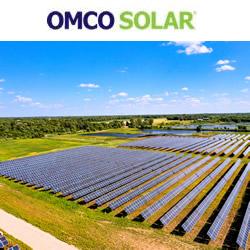
OMCO Origin® Factory-Direct Trackers
A One-In-Portrait (1P) solution that support a wide range of solar projects (utility scale, distributed generation (DG), & C&I markets). Manufactured and factory preassembled in the USA at one of OMCO Solar's 5 US plants (AZ, IN, AL, OH), OMCO makes all structural components with domestic steel and now can offer a 100% domestic tracker. OMCO Origin® Factory-Direct Trackers include universal module mounts with options for all commercially available modules, labor-saving bearings with 6 adjustable ways to compensate for posts and terrain issues, and foundation solutions for every terrain including OMCO C Piles.