
Fixed Offshore Wind Energy Market to hit $59.5 Billion by 2034
The Global Fixed Offshore Wind Energy Market was valued at USD 10.7 billion in 2024 and is estimated to grow at a CAGR of 11.3% to reach USD 59.5 billion by 2034.
The Global Fixed Offshore Wind Energy Market was valued at USD 10.7 billion in 2024 and is estimated to grow at a CAGR of 11.3% to reach USD 59.5 billion by 2034.
More Headlines
- Inlyte Energy Completes Factory Acceptance Test of First Full-Scale Iron-Sodium Battery Storage System
- GeoT*SOL 2026 released: now with improved heat pump design, flexible input options for domestic hot water, and Czech as a new program language
- EnerGaïa Forum 2025 - Kseng Solar Spotlights ETN-Certified Racking Solutions for French Market
- IP66 Rated: How Off-Grid Energy Storage Systems Conquer Extreme Weather Challenges
- Energy Toolbase Launches Energy Storage Partnership with Sungrow to Support PowerStack 255CS and PowerTitan 2.0

The growth is primarily driven by a combination of supportive government initiatives, rising energy demand in coastal zones, and heightened focus on cutting carbon emissions. Policymakers across several regions are rolling out renewable energy mandates, financial incentives, and auction frameworks to accelerate offshore wind development. With densely populated coastal regions requiring clean and efficient energy sources, the availability of strong and consistent offshore wind resources continues to make this technology a practical choice. These projects also reduce transmission losses and improve electricity delivery efficiency to urban and industrial zones.
Higher-capacity turbines are playing a major role in pushing operational output, with newer technologies enhancing reliability, performance, and lowering maintenance costs. Innovations in foundation structures, blade design, and construction techniques are optimizing installation timelines and reducing capital expenditure. Moreover, major market players are channeling investments into R&D to scale up production while ensuring long-term cost competitiveness. Strategic advancements, aimed at improving grid integration and maximizing capacity utilization, are laying the foundation for sustained growth in the fixed offshore wind energy space.
Key growth drivers of the Fixed Offshore Wind Energy Market -
1. Global Renewable Energy & Decarbonization Goals
2. Supportive Government Policies and Incentives
3. Rising Electricity Demand & Energy Security
4. Technological Advancements
5. Economies of Scale & Cost Reductions
6. Strategic Investments & Private Capital
7. Regional Government Targets & Industrial Policies
8. Environmental Sustainability & Corporate Demand
The <= 2 MW segment is expected to reach USD 8 billion by 2034, supported by its adaptability in smaller-scale projects such as island installations, shallow coastal zones, and low-demand areas with limited grid infrastructure. These turbines are ideal for markets where full-scale offshore farms are not viable. Increased interest in hybrid energy systems and incentives across developing countries will add further momentum to this segment's growth trajectory.
The >30 to <=50 m segment is forecast to reach USD 27 billion, fueled by technological advancements that allow for deployment at greater water depths. Coastal wind projects are expanding rapidly in deeper waters to increase power generation capacity. Additionally, government-backed subsidies aimed at promoting floating platforms and deeper offshore turbine projects are reshaping the industry, unlocking opportunities in areas previously considered non-viable for fixed structures.
U.S. Fixed Offshore Wind Energy Market was valued at USD 1.8 billion in 2024. As a growing hub for offshore wind, the U.S. continues to implement incentive schemes and project-specific frameworks, such as leasing and permitting initiatives, that are bolstering deployment along key coastal regions. Energy giants are making long-term commitments through capital investments along the East Coast, signaling strong forward momentum in the regional industry.
Leading companies in the Global Fixed Offshore Wind Energy Market include Southwire Company, Impsa, Iberdrola, Enessere, Equinor, Siemens Gamesa Renewable Energy, Vattenfall, Goldwind, Sumitomo Electric Industries, Nexans, General Electric, GE Vernova, China Three Gorges, RWE Renewables, JERA, Prysmian Group, LS Cable & System, Furukawa Electric, SSE Renewables, and Vestas.
To strengthen their position in the fixed offshore wind energy market, companies are focusing on long-term joint ventures, expanding manufacturing capabilities, and localizing supply chains to improve cost structures. Many are investing in large-scale offshore hubs and building strategic partnerships with governments and regional utilities to secure long-term contracts. Diversifying turbine portfolios, improving modular design, and integrating smart monitoring technologies have also become central to their strategy. Enhanced focus on innovation in turbine efficiency, foundation types, and digital asset management allows these firms to improve energy yield and operational efficiency, ultimately reinforcing their global competitiveness in offshore wind deployment.
Source: https://www.gminsights.com/industry-analysis/fixed-offshore-wind-energy-market
Featured Product
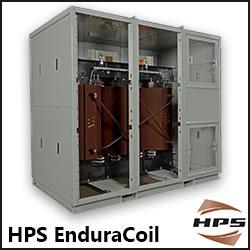
HPS EnduraCoilTM Cast Resin Medium Voltage Transformer
HPS EnduraCoil is a high-performance cast resin transformer designed for many demanding and diverse applications while minimizing both installation and maintenance costs. Coils are formed with mineral-filled epoxy, reinforced with fiberglass and cast to provide complete void-free resin impregnation throughout the entire insulation system. HPS EnduraCoil complies with the new NRCan 2019 and DOE 2016 efficiency regulations and is approved by both UL and CSA standards. It is also seismic qualified per IBC 2012/ASCE 7-10/CBC 2013. Cast resin transformers are self-extinguishing in the unlikely event of fire, environmentally friendly and offer greater resistance to short circuits. HPS also offers wide range of accessories for transformer protection and monitoring requirements.