
Next-Gen Solar Technology Fuels Perovskite Solar Cell Industry Expansion
The perovskite solar cell industry is on a rapid growth trajectory, driven by rising demand for flexible solar solutions, advancements in materials science, and expanding BIPV applications.
According to a new report published by Allied Market Research, the global perovskite solar cell industry size was valued at $0.7 billion in 2023 and is projected to reach $2.7 billion by 2028, growing at an impressive CAGR of 33.3% from 2024 to 2028. This exceptional growth rate highlights the increasing commercial interest in next-generation solar technologies that offer high efficiency, flexibility, and cost advantages.
More Headlines
- e-STORAGE to Deliver 408 MWh Battery Energy Storage System for Vena Energy in South Australia
- Chonnam National University Researchers Resolve Long-Standing Limitation in Thin-Film Solar Cells
- Aura Clean Energy taps into Volvo Penta's battery systems for their energy storage solutions
- DNV supports Sonnedix's €2 Billion refinancing for 1.3GW European solar portfolio
- Natural Power supports OX2 secure financing for three Finnish wind farms

Introduction to Perovskite Solar Cells
Perovskite solar cells (PSCs) are an advanced type of photovoltaic technology that use perovskite-structured materials as the light-absorbing layer. These materials are typically hybrid organic-inorganic metal halides based on lead or tin. The unique crystal structure of perovskite materials allows them to absorb sunlight efficiently and convert it into electricity using simpler and less energy-intensive manufacturing processes than traditional silicon solar cells.
The perovskite solar cell market has gained strong momentum in recent years due to its high power conversion efficiency, low production costs, and versatility in fabrication techniques. Compared to conventional silicon-based solar panels, perovskite solar cells can be lighter, thinner, flexible, and easier to integrate into diverse surfaces, making them a promising alternative for future solar energy systems.
Key Drivers of the Perovskite Solar Cell Market
One of the major drivers of the perovskite solar cell market is the increasing demand for lightweight and flexible solar panels. Perovskite solar cells offer an optimal balance between efficiency, weight, and adaptability, enabling applications that are difficult or impossible for rigid silicon panels. Their flexibility allows deployment in portable solar devices, wearable electronics, electric vehicles, drones, and aerospace systems.
Another key growth factor is the rising adoption of building-integrated photovoltaics (BIPV). Perovskite solar cells can be incorporated into windows, facades, and rooftops without compromising aesthetics or structural design. This capability is particularly attractive in urban environments where space constraints limit the use of conventional rooftop solar installations.
Global efforts to reduce carbon emissions and transition toward renewable energy sources are further accelerating investment in the perovskite solar cell market. Governments and private organizations are increasingly supporting clean energy technologies that combine sustainability with high performance. Perovskite materials also feature tunable bandgaps, enabling better light absorption under different conditions and enhancing overall system efficiency.
In addition, the manufacturing advantages of perovskite solar cells are driving commercialization. These cells can be produced using low-temperature processes such as solution coating and roll-to-roll printing, reducing energy consumption and capital expenditure. This makes large-scale production more cost-effective compared to traditional silicon photovoltaics.
Emerging Opportunities in Building-Integrated Solar
The integration of perovskite solar cells into building materials represents one of the most promising growth opportunities for the market. Their lightweight and customizable properties make them ideal for building-integrated photovoltaics (BIPV), where solar cells replace traditional construction materials.
Unlike conventional panels, perovskite-based BIPV solutions can be semi-transparent, color-tunable, and flexible, enabling innovative architectural designs. Additionally, low-temperature manufacturing methods allow large-area solar films to be produced at lower costs, supporting widespread adoption in smart cities and energy-efficient buildings.
As urbanization increases and demand for decentralized energy generation grows, perovskite solar cells are expected to play a significant role in creating energy-independent infrastructure.
Market Restraints and Challenges
Despite strong growth potential, the perovskite solar cell market faces notable challenges related to stability and durability. Perovskite materials are sensitive to environmental factors such as moisture, heat, and prolonged light exposure. These factors can degrade performance over time, limiting long-term reliability.
In contrast, silicon-based solar cells benefit from decades of real-world performance data and proven durability, which provides higher confidence for investors and utility-scale project developers. Concerns over the lifespan and long-term efficiency of perovskite solar cells remain a key barrier to widespread adoption.
Ongoing research efforts are focused on improving encapsulation techniques, material compositions, and hybrid cell structures to enhance stability. Addressing these challenges will be critical to unlocking the full commercial potential of the perovskite solar cell market.
Perovskite Solar Cell Market Segmentation
The perovskite solar cell market is segmented based on structure, product type, fabrication method, end use, and region.
By structure, the market is divided into planar perovskite solar cells and mesoporous perovskite solar cells. Based on product type, the market includes rigid perovskite solar cells and flexible perovskite solar cells, with flexible variants gaining traction due to rising demand for lightweight applications.
By fabrication method, the market is categorized into solution-based methods, vapor deposition methods, and vapor-assisted solution methods. Solution-based processes dominate due to their simplicity and cost advantages.
In terms of end use, the market serves aerospace, industrial automation, consumer electronics, energy, and other applications. Growing use of perovskite solar cells in consumer electronics and energy generation is significantly contributing to market expansion.
Regionally, the perovskite solar cell market is analyzed across North America, Europe, Asia-Pacific, and LAMEA, with Asia-Pacific emerging as a key manufacturing and innovation hub.
Competitive Landscape
The perovskite solar cell market features a mix of established energy companies and emerging technology innovators. Key players operating in the market include Oxford Photovoltaics, Saule Technologies, Hanwha Group, Toshiba Corporation, Panasonic Holdings Corporation, LONGi, SKY Energy Indonesia, Phono Solar Technology, Front Materials, and Xiamen Weihua Solar.
These companies are focusing on improving cell efficiency, enhancing durability, and scaling production to gain a competitive edge.
Featured Product
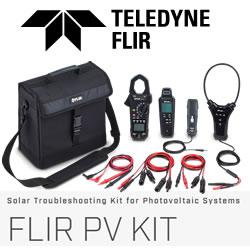
FLIR PV KIT - Solar Troubleshooting Kit for Photovoltaic Systems
FLIR PV kits are designed to assess the performance, safety, and efficiency of residential, commercial, and industrial solar panels and photovoltaic systems. PV kits from FLIR help you diagnose faults and potential failures and ensure optimal energy production, system longevity, and compliance with industry standards. With a PV kit from FLIR, you'll be perfectly equipped for any solar installation or repair.