
Decarbonization Market Outlook: Driving the Global Shift Toward a Low-Carbon Economy
The global decarbonization market is set to grow from $2.2 trillion in 2023 to $4.7 trillion by 2033, driven by carbon pricing, renewable energy adoption, CCUS investments, and strong climate policies supporting the transition to a low-carbon economy.
According to a new report published by Allied Market Research, the decarbonization market size was valued at $2.2 trillion in 2023 and is projected to reach $4.7 trillion by 2033, growing at a CAGR of 8.1% from 2024 to 2033. This robust growth highlights the accelerating global transition toward cleaner, low-carbon energy systems as governments and industries intensify efforts to combat climate change.
More Headlines
- MATRIX RENEWABLES SIGNS FULL EPC AGREEMENT WITH TESLA FOR LANDMARK STANDALONE BATTERY ENERGY STORAGE PROJECT IN THE UK
- Solar Lights Market Growth Driven by Infrastructure and Smart City Projects
- Autonomous inspection of photovoltaic panels
- Battery Technology Market Growth: Powering the Future of Energy Storage and Electrification
- Sand Battery Market Growth: Pioneering Sustainable Energy Storage for a Net-Zero Future

Understanding Decarbonization and Its Importance
Decarbonization refers to the systematic reduction or elimination of carbon dioxide (CO₂) and other greenhouse gas (GHG) emissions from economic activities, particularly across energy, transportation, and industrial sectors. It involves replacing fossil fuels such as coal, oil, and natural gas with renewable and low-carbon energy sources including solar, wind, hydropower, bioenergy, and emerging clean technologies.
The decarbonization market plays a critical role in achieving global climate goals, including net-zero emission targets adopted by governments and corporations worldwide. By limiting GHG accumulation in the atmosphere, decarbonization supports climate resilience, environmental protection, energy security, and long-term economic sustainability.
Regional Analysis
Region-wise, the decarbonization market is analyzed across North America, Europe, Asia-Pacific, and LAMEA. North America emerged as the highest revenue contributor in 2023, supported by strong climate policies, technological leadership, and large-scale investments in clean energy and carbon management solutions.
However, Asia-Pacific is anticipated to grow at the fastest CAGR of 8.6% during the forecast period. Rapid industrialization, urbanization, and aggressive renewable energy targets in countries such as China, India, and Japan are driving large-scale adoption of decarbonization technologies. Government incentives and growing corporate sustainability commitments further enhance regional growth potential.
Market Drivers Fueling Growth
One of the key drivers of the decarbonization market is the rapid expansion of carbon pricing mechanisms and emissions trading systems (ETS). Through carbon taxes and cap-and-trade programs, governments create strong financial incentives for companies to reduce emissions and invest in cleaner alternatives. These market-based tools encourage cost-effective emission reductions while accelerating adoption of renewable energy, energy efficiency solutions, and low-carbon technologies.
As carbon regulations become more stringent across developed and emerging economies, industries are increasingly compelled to decarbonize their operations to remain compliant and competitive. This regulatory push is significantly boosting demand across the global decarbonization market.
Infrastructure and Grid Challenges
Despite strong growth prospects, infrastructure and grid limitations pose notable challenges to the decarbonization market. Many existing power grids were designed for centralized, fossil-fuel-based generation and struggle to integrate variable renewable energy sources such as solar and wind.
Aging transmission infrastructure, insufficient grid interconnections, limited energy storage capacity, and slow grid modernization restrict the efficient distribution of clean power. In addition, regulatory hurdles and high capital costs associated with grid upgrades further hinder widespread adoption of decarbonization technologies. Overcoming these challenges requires large-scale investment in smart grids, advanced storage systems, and digital energy management solutions.
Carbon Capture as a Key Opportunity
Investment in carbon capture, utilization, and storage (CCUS) presents a major growth opportunity within the decarbonization market. CCUS technologies capture CO₂ emissions from industrial facilities and power plants, preventing them from entering the atmosphere. Captured carbon can be stored underground or repurposed for applications such as synthetic fuels, construction materials, or enhanced oil recovery.
CCUS is particularly vital for hard-to-abate sectors such as cement, steel, chemicals, and heavy manufacturing. Increasing government incentives, corporate climate commitments, and integration of CCUS with hydrogen production and bioenergy are strengthening its role as a cornerstone of global decarbonization strategies.
Technology Segmentation Insights
By technology, the decarbonization market is segmented into renewable energy technologies, carbon capture and storage (CCS), energy storage technologies, smart grid technologies, and others. Renewable energy technologies accounted for more than three-fifth of the market share in 2023, maintaining their dominance due to falling costs, technological advancements, and supportive policy frameworks.
The "others" segment, which includes emerging decarbonization solutions across manufacturing, construction, and consumer goods industries, is expected to grow at the fastest CAGR of 9.2%. Rising regulatory pressure and corporate sustainability initiatives are accelerating adoption across these sectors.
End-Use Industry Trends
Based on end-use industry, the decarbonization market is classified into automotive & transportation, oil & gas, energy & utilities, aerospace & defense, and others. The oil and gas segment accounted for over one-fourth of the market share in 2023, driven by increasing investments in emission reduction technologies, methane management, and carbon capture projects.
Meanwhile, the aerospace and defense segment is expected to grow at the fastest CAGR of 8.8% during the forecast period. Growth is fueled by rising adoption of sustainable aviation fuels (SAF), electric and hydrogen-powered aircraft development, and strict emission regulations targeting aviation emissions.
Competitive Landscape
The global decarbonization market is highly competitive, with key players focusing on technological innovation, strategic partnerships, and global expansion. Major companies operating in the market include Air Liquide, Siemens AG, Vestas Wind Systems A/S, Schneider Electric SE, Tesla Inc., General Electric Company, Nippon Yusen Kabushiki Kaisha, ZF Friedrichshafen, Atos SE, and Isometrix.
Conclusion
The decarbonization market is at the center of the global energy transition, enabling economies to reduce emissions while supporting sustainable growth. Driven by carbon pricing policies, renewable energy expansion, and CCUS investments, the market is poised for strong long-term growth. Overcoming infrastructure challenges and accelerating innovation will be critical to unlocking the full potential of decarbonization worldwide.
Featured Product
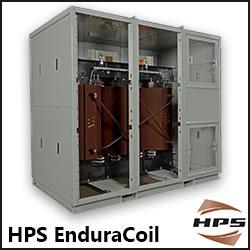
HPS EnduraCoilTM Cast Resin Medium Voltage Transformer
HPS EnduraCoil is a high-performance cast resin transformer designed for many demanding and diverse applications while minimizing both installation and maintenance costs. Coils are formed with mineral-filled epoxy, reinforced with fiberglass and cast to provide complete void-free resin impregnation throughout the entire insulation system. HPS EnduraCoil complies with the new NRCan 2019 and DOE 2016 efficiency regulations and is approved by both UL and CSA standards. It is also seismic qualified per IBC 2012/ASCE 7-10/CBC 2013. Cast resin transformers are self-extinguishing in the unlikely event of fire, environmentally friendly and offer greater resistance to short circuits. HPS also offers wide range of accessories for transformer protection and monitoring requirements.