Hydrogen Generator Market Growth Driven by Clean Energy Adoption
The global hydrogen generator industry was valued at $1.2 billion in 2020 and is projected to reach $2.2 billion by 2030, growing at a CAGR of 5.8%, driven by clean energy adoption, government initiatives, and rising industrial demand.
According to a new report published by Allied Market Research, the global hydrogen generator market share was valued at $1.2 billion in 2020 and is projected to reach $2.2 billion by 2030, growing at a CAGR of 5.8% from 2021 to 2030. The market growth is primarily driven by rising awareness of clean energy solutions, increasing adoption of eco-friendly technologies, and strong government initiatives to reduce greenhouse gas emissions.
More Headlines
- Clean Energy Infrastructure Industry Growth Driven by Renewables and EVs
- BidItUp to Host Landmark 8-Day Auction of Production-Ready Lithium-Ion Battery Manufacturing Assets from XALT Energy
- India Battery Energy Storage System (BESS) Market to Hit $19.4 Billion by 2035 - Powering the Nation's Renewable Revolution
- Fuel Cell BOP Market Growth Driven by Hydrogen Energy Adoption
- Protecting the backbone of clean energy - Protection technology ensures safe, reliable battery storage for renewables

Overview of the Hydrogen Generator Market
A hydrogen generator is a system designed to produce hydrogen gas through various processes such as steam reforming or electrolysis. Hydrogen is increasingly recognized as a clean and efficient energy carrier with applications across chemical processing, fuel cells, petroleum refining, and energy generation. The hydrogen generator market is gaining momentum as industries and governments seek alternatives to fossil fuels to meet sustainability goals.
Growing environmental concerns, coupled with stricter emission regulations, have accelerated the transition toward hydrogen-based energy systems. Hydrogen generators play a vital role in enabling decentralized and on-site hydrogen production, reducing dependency on traditional energy sources and minimizing transportation-related emissions.
Regional Outlook
Region-wise, the hydrogen generator market is analyzed across North America, Europe, Asia-Pacific, and LAMEA.
North America accounted for the largest market share in 2020, supported by advanced hydrogen infrastructure, strong R&D investments, and favorable government policies.
Asia-Pacific is expected to be the fastest-growing region, projected to register the highest CAGR of approximately 7.2% during the forecast period. Rapid industrialization, increasing energy demand, and government initiatives promoting hydrogen energy in countries such as China, Japan, and South Korea are fueling market growth in the region.
Market Drivers and Growth Factors
One of the key drivers of the hydrogen generator market is the increasing global awareness regarding the environmental benefits of hydrogen energy. Governments worldwide are promoting sustainable energy solutions to curb greenhouse gas emissions caused by fossil fuel consumption and rapid industrialization. Emissions such as carbon dioxide, methane, and nitrous oxide have significantly contributed to global temperature rise over the past century, pushing policymakers toward cleaner alternatives.
Hydrogen generators support emission reduction by enabling cleaner fuel production and reducing sulfur-related inefficiencies in advanced catalyst technologies. Sulfur contamination reduces catalyst efficiency and increases carbon dioxide emissions in fuel-efficient gasoline engines and hybrid diesel systems. Hydrogen-based technologies help overcome these limitations, further strengthening market growth.
In addition, the growing adoption of hydrogen fuel cells in industrial, automotive, and healthcare applications is contributing to increased demand for hydrogen generators. Industries are increasingly investing in hydrogen infrastructure to support long-term energy transition goals.
Market Restraints
Despite promising growth prospects, high initial costs remain a major restraint for the hydrogen generator market. Hydrogen generators require substantial capital investment compared to conventional fossil fuel-based power generators. High equipment costs, infrastructure requirements, and installation expenses limit adoption, especially in cost-sensitive markets.
Moreover, hydrogen production technologies such as electrolysis demand significant energy input, which can increase operational costs if renewable power sources are not readily available. These factors are expected to restrain hydrogen generator market growth during the forecast period.
Segmentation Analysis
The hydrogen generator market is segmented based on product type, process, capacity, application, and region.
By product type, the market is categorized into onsite and portable hydrogen generators. The onsite segment accounted for the largest market share in 2020, as it enables continuous hydrogen production at the point of use, reducing storage and transportation costs.
By process, the market is segmented into steam reforming, electrolysis, and others. Steam reforming dominated the market in 2020 due to its cost-effectiveness and widespread industrial adoption. However, electrolysis is expected to gain traction with the increasing use of renewable energy sources.
By capacity, the hydrogen generator market is divided into less than 300 W, 300 W-1 kW, and more than 1 kW. The more than 1 kW segment accounted for the largest market share in 2020, driven by demand from large-scale industrial and chemical processing applications.
By application, the market includes chemical processing, fuel cells, petroleum recovery, refining, and others. Chemical processing emerged as the leading segment and is expected to generate significant hydrogen generator market opportunities during the forecast period due to rising hydrogen demand in chemical synthesis and refining operations.
Competitive Landscape
The hydrogen generator market is moderately competitive, with key players focusing on partnerships, acquisitions, and technological advancements. Major companies operating in the market include Air Liquide, Air Products and Chemical Inc., Praxair Technology Inc., Linde AG, Proton OnSite Inc., Hy9 Corporation, Hydrogenics Corporation, Epoch Energy Technology Corporation, MVS Engineering Pvt. Ltd., McPhy Energy SA, and Nel Hydrogen.
Strategic collaborations are playing a crucial role in market expansion. For instance, in 2020, Air Products and Thyssenkrupp signed an exclusive cooperation agreement for world-scale electrolysis plants, strengthening hydrogen production capabilities and advancing green hydrogen adoption.
Impact of COVID-19 on the Market
The COVID-19 pandemic had a mixed impact on the global hydrogen generator market. The decline in automotive production and postponement of hydrogen fuel vehicle adoption negatively affected market growth during the initial phase of the pandemic. Industrial shutdowns also led to reduced electricity demand, limiting hydrogen production.
However, the healthcare sector witnessed increased demand for hydrogen fuel cells to ensure uninterrupted power supply in hospitals. Hydrogen fuel cells supported critical medical equipment and emergency power needs, partially offsetting market losses and highlighting the reliability of hydrogen-based energy systems.
Future Outlook
With increasing investments in clean energy, supportive government policies, and rising industrial demand, the hydrogen generator market is expected to experience steady growth through 2030. Technological advancements, declining renewable energy costs, and expanding hydrogen infrastructure will further enhance market adoption globally.
Featured Product
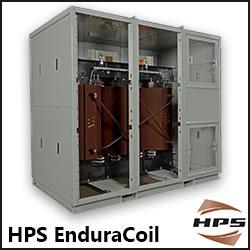
HPS EnduraCoilTM Cast Resin Medium Voltage Transformer
HPS EnduraCoil is a high-performance cast resin transformer designed for many demanding and diverse applications while minimizing both installation and maintenance costs. Coils are formed with mineral-filled epoxy, reinforced with fiberglass and cast to provide complete void-free resin impregnation throughout the entire insulation system. HPS EnduraCoil complies with the new NRCan 2019 and DOE 2016 efficiency regulations and is approved by both UL and CSA standards. It is also seismic qualified per IBC 2012/ASCE 7-10/CBC 2013. Cast resin transformers are self-extinguishing in the unlikely event of fire, environmentally friendly and offer greater resistance to short circuits. HPS also offers wide range of accessories for transformer protection and monitoring requirements.