
As laboratories move from proof-of-concept cells to reproducible high-efficiency prototypes, every component in the processing line must preserve purity, chemical stability, and reproducibility. This is where Boron Nitride (BN) Crucibles have become indispensable.
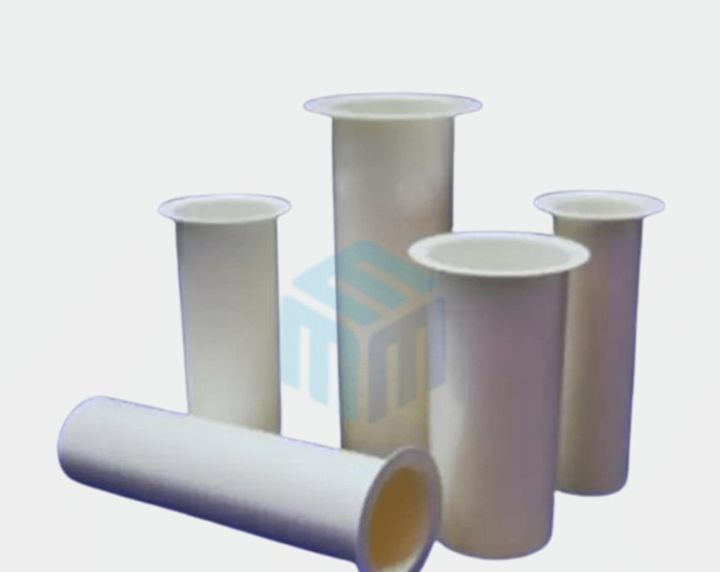 Scaling Laboratory Solar Cell Research with High-Purity Boron Nitride Crucibles
James Charles, Marketing Specialist | M-Kube Enterprise LLC
In solar cell R&D, especially within U.S. research facilities and semiconductor pilot lines, precision in thermal processing is not a luxury — it’s a requirement. As laboratories move from proof-of-concept cells to reproducible high-efficiency prototypes, every component in the processing line must preserve purity, chemical stability, and reproducibility.
This is where Boron Nitride (BN) Crucibles have become indispensable. Whether used for melting semiconductor precursors, vaporizing halides, or sintering absorber materials, BN provides the thermal endurance and chemical inertness necessary to maintain consistent sample integrity.
Why Crucible Choice Determines Solar Cell Quality
Solar cell research — from perovskite-silicon tandems to GaAs and CdTe thin films — involves controlled heating, vapor deposition, and melt-based synthesis. Crucibles act as the containment and interface between the sample and the furnace atmosphere.
When materials like alumina, graphite, or quartz are used, researchers often encounter:
- Contamination from crucible-wall diffusion (Al, Si, or C atoms entering the sample).
- Reaction with molten materials, especially halides or chalcogenides.
- Poor wettability, leading to uneven film deposition or incomplete melting.
These microscopic impurities can degrade photovoltaic conversion efficiency by altering bandgap uniformity or doping precision.
High-purity Boron Nitride Crucibles mitigate these issues, providing a clean, stable, and non-reactive containment system suitable for high-value solar research materials.
Material Science Behind Boron Nitride Crucibles
Boron nitride (BN) is a covalently bonded ceramic available in multiple structural forms; for crucibles, the hexagonal phase (h-BN) is most common. Its anisotropic crystal lattice — similar to graphite — allows strong in-plane bonds and weak interlayer forces, giving it both mechanical stability and lubricity.
Hot-pressed or isostatically pressed BN ceramics used in crucibles typically achieve purities above 99.7%, resulting in negligible outgassing and impurity release at temperatures up to 2000°C in inert atmospheres.
Key Thermophysical Properties of BN Crucibles
|
Property |
Typical Value |
Relevance to Solar R&D |
|
Purity |
≥99.7% BN |
Prevents contamination of sensitive semiconductors |
|
Maximum Working Temperature |
2000°C (N₂ or Ar atmosphere) |
Suitable for GaAs, InP, CdTe synthesis |
|
Thermal Conductivity |
30–60 W/m·K |
Promotes uniform heat distribution |
|
Thermal Expansion |
1.5–2.5 × 10⁻⁶ /K |
Minimizes thermal stress |
|
Density |
2.0–2.3 g/cm³ |
Combines strength with lightweight construction |
|
Electrical Resistivity |
>10¹³ Ω·cm |
Ideal for electrically isolated heating setups |
This combination of thermal stability, non-reactivity, and smooth surface finish makes BN ideal for both melting and evaporation-based solar material synthesis.
BN Crucibles in Key Solar Cell Research Processes
Crystal Growth and Semiconductor Melting
For materials like GaAs, CdTe, and CIGS, crystal growth involves controlled melting and solidification. BN’s non-wetting and inert properties prevent adhesion of the melt and eliminate contamination from crucible walls. This ensures consistent stoichiometry during solidification, improving cell performance reproducibility.
Perovskite Precursor Handling
Organic–inorganic hybrid perovskites are sensitive to reactive surfaces. Small boron nitride crucibles provide a chemically neutral interface, ideal for thermal decomposition and precursor vaporization during thin-film formation.
High-Temperature Sintering
Powder-based absorber layers or ceramic back contacts are sintered at temperatures exceeding 1500°C. BN withstands these temperatures without oxidizing or warping, maintaining dimensional integrity for repeated use.
Vapor Transport and Thin Film Evaporation
In closed or semi-closed vapor transport systems, custom boron nitride crucibles are used as source boats for elemental vaporization. Their low reactivity with halides and chalcogenides allows precise control over film composition.
Why BN Crucibles Outperform Conventional Materials
|
Parameter |
Boron Nitride (BN) |
Alumina (Al₂O₃) |
Quartz (SiO₂) |
Graphite |
|
Max Temperature (°C) |
2000 |
1750 |
1200 |
2500 (in inert) |
|
Atmosphere Compatibility |
Inert, vacuum, reducing |
Oxidizing |
Oxidizing |
Inert only |
|
Reactivity with Metals/Halides |
None |
Moderate |
High |
Reacts with halides |
|
Thermal Shock Resistance |
Excellent |
Moderate |
Good |
Poor in air |
|
Sample Purity |
Excellent |
Good |
Fair |
Moderate |
This comparison shows that while graphite offers high-temperature tolerance, its reactivity with halides and oxygen limits its use in clean environments. Quartz, on the other hand, reacts with most halides and has limited high-temperature capability. BN remains the most balanced and scientifically reliable crucible material for controlled photovoltaic material processing.
Customization and Research-Driven Design
Research institutions often require crucibles tailored to unique furnaces or vapor systems. Leading boron nitride crucible suppliers in the U.S. provide custom boron nitride crucibles designed around:
- Specific geometry (cylindrical, conical, split, or rectangular).
- Furnace integration (vertical/horizontal orientation, thermocouple access).
- Volume requirements, from small boron nitride crucibles (~5 mL) to large crucibles for pilot reactors.
- Optional lids and covers to prevent sample oxidation and vapor loss.
Custom fabrication ensures that heat flux, melt volume, and reaction containment are all optimized for high repeatability — critical when scaling lab results toward industrial relevance.
Integration with Laboratory and Pilot Furnaces
BN crucibles are compatible with multiple furnace types commonly used in photovoltaic research:
- Vacuum and inert-atmosphere furnaces for semiconductor melting.
- Tube furnaces for vapor-phase transport or precursor annealing.
- Hot-wall reactors for thin-film CVD and PVD.
- Controlled atmosphere box furnaces for sintering layered materials.
Due to their electrical insulation, BN crucibles can also be placed directly in induction setups with graphite susceptors, providing thermal isolation without chemical interference.
Longevity and Maintenance Considerations
BN crucibles, while durable, are ceramics — and thus require careful handling.
To ensure consistent performance:
- Avoid direct oxidation: Limit use above 900°C in air.
- Clean using dry nitrogen or vacuum heating: Avoid liquid solvents or abrasives.
- Store in dry, inert environments: BN can adsorb moisture over time.
- Handle with precision tools: BN is soft (Mohs 2), so avoid impact or edge pressure.
Under proper use, BN crucibles can last hundreds of heating cycles without microcracking or contamination.
Evaluating Boron Nitride Crucible Quality and Pricing
The boron nitride crucible price depends on purity, wall thickness, and machining precision.
While cost per unit may exceed alumina or graphite crucibles, BN’s extended lifespan and reduction in sample contamination offset its initial investment.
A reputable boron nitride crucible supplier will provide:
- Purity certifications (≥99.7%) verified by ICP analysis.
- Dimensional accuracy (±0.1 mm) for furnace fitment.
- Controlled grain size for consistent thermal conductivity.
- Custom machining options for specialized applications.
When sourcing boron nitride crucibles for sale, prioritize purity and structural consistency over cost alone — critical in semiconductor or solar research environments.
Role in Scaling from Laboratory to Pilot Production
As U.S. laboratories transition their photovoltaic discoveries into pilot-scale manufacturing, reproducibility becomes a measurable engineering challenge.
BN crucibles support this scale-up by:
- Maintaining consistent heat transfer and chemical isolation.
- Reducing sample loss during melt and sintering.
- Enabling reuse without contamination buildup.
- Allowing precise control over thermal gradients and material flow.
From early-stage research to small-batch wafer fabrication, boron nitride crucibles ensure that process parameters developed in the lab translate accurately to production-scale environments.
Conclusion
Precision solar research demands materials that are not just heat-tolerant, but also chemically invisible to the sample. High-purity Boron Nitride Crucibles meet this standard — combining thermal resilience, non-wetting behavior, and exceptional inertness under extreme conditions.
For U.S. laboratories exploring next-generation photovoltaics, these crucibles are not expendables; they are precision-engineered tools that define reproducibility and scale-up potential.
Whether you need small boron nitride crucibles for micro-scale melting or custom boron nitride crucibles for full reactor assemblies, partnering with a trusted boron nitride crucible supplier ensures cleaner experiments, longer crucible life, and reliable data integrity — essential for the next leap in solar cell efficiency.
The content & opinions in this article are the author’s and do not necessarily represent the views of AltEnergyMag
Comments (0)
This post does not have any comments. Be the first to leave a comment below.
Featured Product