
Energy Transition Market to Surpass USD 6.24 Trillion by 2035 | Global Clean Energy Outlook
The global Energy Transition Market, valued at USD 2.58 trillion in 2025, is projected to reach USD 6.24 trillion by 2035 at an 8.9% CAGR, driven by decarbonization efforts, renewable energy adoption, electrification, and smart grid investments.
Energy Transition Market Outlook 2025-2035: Driving the Global Shift to Clean Energy
More Headlines
- PVH USA Advances Low-Carbon Solar Infrastructure with Sustainable-by-Design Tracker Innovation
- Yes Solar Announces Annual Maintenance Plan Offering Discounts and Savings
- Renewable Energy in Mining Market to Reach USD 3.4 Billion by 2032 | Clean Power Revolution
- The Complete Guide to Single-Family Home Energy Storage Capacity: Size It Right for Resilience & Savings
- Scanifly and IronRidge Integrate Drone-Based PV Design with Racking Layouts, Eliminating Duplicate Work and Accelerating Project Timelines

According to Acumen Research and Consulting, the Global Energy Transition Market was valued at USD 2.58 trillion in 2025 and is projected to reach USD 6.24 trillion by 2035, expanding at a compound annual growth rate (CAGR) of 8.9% between 2026 and 2035. This remarkable growth trajectory reflects the accelerating investments in renewable energy, electrification, smart grid technologies, and sustainable infrastructure worldwide.
As climate change, resource scarcity, and energy security challenges intensify, the Energy Transition Market is emerging as one of the most powerful forces driving global economic transformation.
What Is the Energy Transition Market?
The Energy Transition Market encompasses the entire ecosystem of technologies, services, and policies that facilitate the shift from fossil fuels to cleaner, more sustainable energy sources. It includes:
- Renewable energy generation (solar, wind, hydro, biomass, and geothermal)
- Energy storage systems (battery storage, pumped hydro, hydrogen)
- Electrification of transport and industry
- Carbon capture and utilization technologies (CCUS)
- Smart grids and digital power infrastructure
- Energy efficiency and demand management systems
The purpose of this transition is not only to mitigate greenhouse gas emissions but also to build resilient, decentralized, and efficient energy systems capable of meeting future global demand.
Why the Energy Transition Market Is Growing So Rapidly
Several interconnected drivers are propelling the Energy Transition Market toward unprecedented expansion.
1. Global Push Toward Decarbonization
The urgency of climate change has led governments to implement aggressive carbon reduction targets under frameworks such as the Paris Agreement and the COP28 commitments. Major economies — including the U.S., European Union, China, and India — have pledged net-zero emissions by 2050-2060, catalyzing massive investment in clean technologies.
2. Declining Cost of Renewable Energy
Technological advancements have made solar and wind power cheaper than fossil fuels in most parts of the world. According to Acumen Research, renewable energy costs have fallen by over 80% in the last decade, making clean power generation the dominant investment category in global energy infrastructure.
3. Electrification of Transport and Industry
Electric vehicles (EVs), electric heat pumps, and electrified industrial processes are transforming how energy is consumed. This shift toward electrification boosts demand for renewable electricity and advanced grid systems — key components of the Energy Transition Market.
4. Energy Security and Geopolitical Shifts
The volatility in fossil fuel supply chains, amplified by global conflicts and price shocks, has highlighted the need for domestic renewable generation and energy independence. Countries are now prioritizing local clean energy production to stabilize their economies and reduce import reliance.
5. Green Financing and ESG Investments
Financial markets are aligning with sustainability goals. Environmental, Social, and Governance (ESG) investing surpassed USD 35 trillion globally, with clean energy assets drawing the largest share. Green bonds and climate-focused funds are directly supporting projects in renewable power, grid modernization, and hydrogen technologies.
Key Market Segments in the Energy Transition Industry
The Energy Transition Market is a diverse landscape comprising multiple technology and service segments, each playing a crucial role in enabling a low-carbon future.
1. Renewable Energy Generation
The backbone of the energy transition, renewable power sources — particularly solar and wind — account for more than two-thirds of all new capacity additions worldwide. The integration of large-scale solar farms, offshore wind turbines, and hybrid renewable projects is rapidly increasing global clean power output.
2. Energy Storage Systems
Energy storage solutions bridge the gap between intermittent renewable generation and consistent energy supply. Advanced lithium-ion batteries, flow batteries, and hydrogen-based storage systems are critical for grid stability, especially as renewables scale up.
3. Hydrogen Economy
Hydrogen is emerging as a key vector in decarbonization. Green hydrogen, produced using renewable electricity, is increasingly used in heavy industry, transportation, and power generation. The global hydrogen market is expected to be one of the fastest-growing subsegments within the Energy Transition Market.
4. Smart Grids and Digitalization
Modern energy systems depend on intelligent, interconnected grids capable of managing distributed energy resources. The integration of AI, IoT, and blockchain technologies enables real-time monitoring, demand forecasting, and automated energy balancing — making grids smarter and more efficient.
5. Carbon Capture, Utilization, and Storage (CCUS)
CCUS technologies capture emissions from industrial sources and reuse or store them safely underground. While still emerging, CCUS is critical to achieving net-zero targets for hard-to-abate sectors such as cement, steel, and petrochemicals.
Regional Insights: Where Is the Growth Happening?
North America: Policy-Driven Acceleration
North America remains a leader in the Energy Transition Market, supported by government initiatives such as the U.S. Inflation Reduction Act (IRA) and Canada's Clean Electricity Regulations. These frameworks incentivize investment in renewable energy, EV charging infrastructure, and green hydrogen.
Major corporations — from Tesla and General Electric to NextEra Energy — are accelerating clean energy integration across industrial, commercial, and residential applications.
Europe: The Decarbonization Pioneer
Europe continues to lead in policy innovation and sustainability investment. The European Green Deal and REPowerEU Plan aim to reduce carbon emissions by 55% by 2030 and achieve complete energy independence from fossil fuels by 2050.
Countries such as Germany, the U.K., and the Netherlands are expanding offshore wind capacity and investing heavily in hydrogen production and energy storage. Meanwhile, Scandinavia is setting new benchmarks for smart grid integration.
Asia-Pacific: The Fastest-Growing Region
Asia-Pacific is expected to witness the highest CAGR through 2035. Rapid urbanization, industrialization, and population growth are driving massive energy demand. Nations like China, India, Japan, and South Korea are investing in renewable energy expansion, smart grids, and battery manufacturing.
China leads the world in solar and EV deployment, while India's National Green Hydrogen Mission underscores its commitment to clean energy independence.
Latin America, Middle East & Africa: Emerging Energy Frontiers
These regions are gaining traction as new investment hubs in renewable energy and sustainable infrastructure. The Middle East is diversifying from oil dependence with large solar and hydrogen projects in Saudi Arabia, UAE, and Oman. Similarly, Brazil and Chile are leading renewable energy adoption in Latin America, driven by abundant natural resources and supportive policy frameworks.
Download Sample Pages of Energy Transition Market Report by Acumen Research And Consulting here.
Key Players in the Energy Transition Market
The competitive landscape of the Energy Transition Market includes traditional energy companies transitioning to renewables, specialized technology developers, and infrastructure investors.
Prominent players include:
- Siemens AG
- General Electric (GE)
- Schneider Electric SE
- NextEra Energy, Inc.
- Orsted A/S
- Iberdrola S.A.
- Enel Group
- Tesla, Inc.
- Shell plc (Renewables Division)
- TotalEnergies SE
These companies are actively investing in clean power generation, storage systems, and grid innovation, forming public-private partnerships to scale decarbonization efforts worldwide.
Emerging Trends Shaping the Energy Transition Market
The next decade will be marked by rapid technological innovation, cross-sector collaboration, and large-scale decarbonization initiatives.
Here are the top five trends shaping the future:
1. Grid Decentralization and Distributed Energy Systems
The energy landscape is moving from centralized generation to distributed networks powered by rooftop solar, microgrids, and peer-to-peer energy trading.
2. Electrification of Mobility
The global transition to electric vehicles is fueling electricity demand and infrastructure upgrades. By 2030, over 50% of new vehicles sold globally are expected to be electric.
3. Integration of Artificial Intelligence (AI) in Energy Management
AI and machine learning are optimizing demand response, predictive maintenance, and renewable integration — improving operational efficiency and cost savings.
4. Corporate Decarbonization Commitments
Global corporations are setting science-based targets and investing in renewable power purchase agreements (PPAs), further accelerating demand for clean energy solutions.
5. Hydrogen and Ammonia as Energy Carriers
Green hydrogen and ammonia are gaining traction as clean alternatives to fossil fuels in shipping, aviation, and heavy industries.
Challenges to Overcome
While the Energy Transition Market is booming, several barriers need to be addressed for sustained growth:
- Infrastructure Gaps: Upgrading transmission networks to accommodate renewables remains a major challenge.
- Policy Uncertainty: Inconsistent regulatory frameworks across regions can hinder investment confidence.
- Energy Storage Limitations: Scaling up cost-effective long-duration storage solutions is crucial to balance intermittent renewables.
- Raw Material Constraints: Dependence on critical minerals (lithium, cobalt, nickel) poses supply risks.
- Capital Intensity: Energy transition projects require substantial upfront investment and long payback periods.
Addressing these challenges will require global cooperation, technological breakthroughs, and innovative financing models.
The Road Ahead: What the Future Holds
By 2035, the Energy Transition Market will redefine the world's energy infrastructure. According to Acumen Research and Consulting, the market will expand from USD 2.58 trillion in 2025 to USD 6.24 trillion by 2035, growing at a robust 8.9% CAGR.
This decade will witness:
- A surge in renewable capacity installations exceeding 10,000 GW globally
- Widespread adoption of hydrogen-powered industries
- Major advances in battery recycling and green material innovation
- Emergence of AI-driven grid orchestration systems
- Expansion of carbon-neutral smart cities
The Energy Transition Market is not just a technological revolution — it is an economic and societal transformation that will define the next era of industrial progress.
The global Energy Transition Market is on track to surpass USD 6.24 trillion by 2035, marking one of the largest capital shifts in human history. As renewable energy, electrification, and digital innovation converge, the future of energy is being rewritten — cleaner, smarter, and more resilient than ever before.
With nations and corporations aligning behind net-zero goals, the coming decade will be defined by collaboration, innovation, and the shared pursuit of sustainable prosperity.
Featured Product
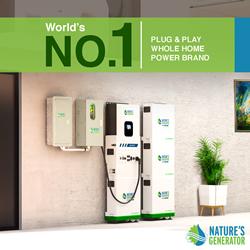
Nature's Generator MyGrid 10K
A 10,000W plug & play whole-home generator with a 10kWh LiFePO4 battery for reliable backup power. Features easy setup, flexible 120V/208-240V input, and solar/wind charging. Expandable with extra batteries or solar panels, and can pair two units for 20,000W for even larger energy needs. Powers your home during power outages, reduces electricity costs, and supports sustainable energy.