India Battery Energy Storage System (BESS) Market to Hit $19.4 Billion by 2035 — Powering the Nation’s Renewable Revolution
The India Battery Energy Storage System (BESS) Market is projected to reach USD 19.4 billion by 2035. Discover how falling battery costs, renewable integration, and strong government policies are fueling India's clean energy transformation.
India Battery Energy Storage System (BESS) Market Outlook 2026-2035: Growth, Trends, Drivers & Forecast
More Headlines
- Clean Energy Infrastructure Industry Growth Driven by Renewables and EVs
- BidItUp to Host Landmark 8-Day Auction of Production-Ready Lithium-Ion Battery Manufacturing Assets from XALT Energy
- Hydrogen Generator Market Growth Driven by Clean Energy Adoption
- Fuel Cell BOP Market Growth Driven by Hydrogen Energy Adoption
- Protecting the backbone of clean energy - Protection technology ensures safe, reliable battery storage for renewables

The India Battery Energy Storage System (BESS) Market is set for rapid expansion as the country accelerates its transition to renewable energy, enhances grid stability, and strengthens its clean energy infrastructure. With renewables such as solar and wind rapidly scaling and power demand rising, battery energy storage systems are becoming essential for balancing supply and demand, ensuring grid reliability, and enabling energy independence.
Battery Energy Storage Systems (BESS) store electrical energy using rechargeable batteries so it can be discharged when needed — reducing the intermittency of renewables, improving power quality, and facilitating peak load management. BESS solutions help utilities, commercial users, and residential customers improve energy efficiency, reduce costs, and enhance resiliency.
India BESS Market Size & Forecast
According to Acumen Research And Consulting's latest analysis, the India Battery Energy Storage System Market has demonstrated strong performance and is poised for exponential growth:
• 2025 Market Revenue: Approx. USD 2,188.1 million
• 2035 Projected Market Size: Around USD 19,445.2 million
• Expected CAGR (2026-2035): ~24.3%
This forecast underscores the rapidly increasing deployment of BESS across utility, commercial, industrial, and residential applications, supported by government incentives, falling battery costs, and the integration of large-scale renewable power projects.
What Is a Battery Energy Storage System (BESS)?
A Battery Energy Storage System (BESS) refers to a technology that stores electrical energy in rechargeable batteries so it can be discharged at times of high demand, shortage, or when renewable generation dips. BESS technologies help in:
• Grid stabilization and frequency regulation
• Peak shaving and load shifting
• Backup power for critical infrastructure
• Integration of intermittent renewable energy sources
BESS primarily involves lithium-ion batteries, which dominate the market due to their high energy density, faster response time, and improved safety profiles, although other battery types (like flow and sodium-ion batteries) are beginning to gain traction.
India BESS Market Drivers Supporting Growth
1. Renewable Energy Integration
India has set ambitious renewable energy targets, planning to achieve 500 GW of renewable capacity by 2030. As solar and wind capacities expand, the need for stable and reliable storage systems becomes critical to manage the intermittent nature of these sources. BESS enables utilities to store excess energy during peak generation and release it during periods of high demand or low generation, ensuring smoother grid operation.
2. Declining Battery Costs
The cost of lithium-ion batteries continues to decline due to economies of scale, technological advances, and global manufacturing improvements. Lower battery prices make BESS solutions more economically viable for large-scale deployment across utility and commercial sectors.
3. Government Support and Policy Incentives
The Indian government has introduced numerous policies and incentives to encourage energy storage adoption, including viability gap funding (VGF) schemes, production-linked incentives (PLI) for battery manufacturing, and tax breaks. These measures aim to reduce upfront costs and attract domestic and foreign investment in the BESS industry.
4. Grid Modernization and Peak Load Demand
Rapid urbanization and industrial expansion in India are increasing electricity demand. BESS helps utilities meet peak load demands without resorting to expensive and carbon-intensive generation methods. Modernizing the grid with energy storage enhances flexibility, prevents outages, and supports remote and rural electrification projects.
5. Rising Demand for Reliable Power Supply
Consumers and industries increasingly demand uninterrupted and quality power supply. BESS solutions provide backup power during outages and optimize energy usage, making them attractive for industrial parks, critical infrastructure, and commercial applications.
India Battery Energy Storage System Market Segment Analysis
By Battery Type
• Lithium-ion Battery: Dominant segment due to high energy density, faster response times, and suitability for utility, commercial, and residential applications.
• Advanced Lead-acid Battery: Used in cost-sensitive and backup power applications.
• Flow Battery: Growing in utility-scale deployments for long-duration storage.
• Sodium-ion Battery: Emerging alternative with reduced material costs.
Lithium-ion batteries accounted for over 70% of the market share in 2025 due to their superior performance and declining costs.
By Connection Type
• On-grid Systems: The largest segment, used for grid stability, renewable integration, and frequency management by utilities.
• Off-grid Systems: Growing due to rising demand for energy access in remote and rural areas.
By Ownership Model
• Utility Owned: Dominant due to large-scale grid storage projects to support renewables and reduce dependency on fossil fuels.
• Customer Owned: Includes residential and business energy storage for backup and cost optimization.
• Third-party Owned: An emerging model where service providers install and maintain storage on behalf of customers.
By Application
• Utility Applications: The largest share, driven by grid-scale deployments for frequency regulation and renewable integration.
• Commercial & Industrial: Growing rapidly due to peak load management and energy cost benefits.
• Residential: Increasing adoption for backup power and solar storage systems.
India BESS Market Regional Adoption & Trends
Major Urban and Grid Centers
India's BESS market has gained significant traction in urban centers such as Delhi, Maharashtra, Karnataka, and Tamil Nadu, where power demand and renewable penetration are high. Large utilities and grid operators are investing heavily in storage solutions to manage peak demand and ensure grid resilience.
Rural and Off-grid Electrification
In remote regions, off-grid BESS deployments help bring reliable power to villages and industrial sites lacking stable grid connections. Integrated with rooftop solar and microgrid setups, these systems improve energy access and reduce reliance on diesel generators.
State Level Auctions and Capacity Expansion
State governments such as Rajasthan and Madhya Pradesh are actively tendering large BESS capacities — including multi-gigawatt tender rounds — reflecting aggressive deployment plans and innovative pricing models.
Government Initiatives and Policy Support
India's energy transition strategy includes strong policy backing for energy storage systems. Key policy drivers include:
• Viability Gap Funding (VGF): Subsidies to bridge cost gaps for battery storage projects.
• Production Linked Incentives (PLI) for Battery Manufacturing: Promotes local battery production and reduces import dependence.
• Transmission Charge Waivers: Extended waivers on inter-state transmission charges for storage projects help reduce operating costs.
• Renewable Integration Goals: Targets for renewable capacity (e.g., 500 GW by 2030) indirectly support BESS adoption.
These policy levers encourage investment, reduce barriers for developers, and accelerate BESS deployment at scale.
India Battery Energy Storage System Market Statistics
Here's a snapshot of the India BESS market's key metrics:
• Market Value (2025): ~USD 2,188.1 million (est.)
• 2035 Forecast: ~USD 19,445.2 million
• CAGR (2026-2035): ~24.3%
• Dominant Battery Type: Lithium-ion (>70%)
• Leading Application: Utility-scale storage
• Key Drivers: Renewable energy integration, declining battery costs, and supportive policies
Major Players in the India BESS Market
Several leading firms are shaping the India BESS landscape with large deployments, R&D investments, and innovative business models:
• Tata Power Renewable Energy Ltd.
• AES Corporation (Fluence JV)
• Reliance New Energy Ltd.
• Exide Energy Solutions Ltd.
• Amara Raja Energy & Mobility Ltd.
• Adani Energy Solutions Ltd.
• JSW Energy Ltd.
• CATL
• LG Energy Solution Ltd.
• Panasonic Holdings Corp.
These players contribute to technology innovation, international collaboration, and large project execution across India.
Challenges Facing the India BESS Market
Despite strong momentum, several challenges exist:
• High CapEx & Import Dependence: A large portion of battery cells is imported, increasing costs and supply chain risks.
• Regulatory Uncertainty: Varied state regulations on cost recovery, wheeling charges, and tariff structures can complicate investment decisions.
• Grid Integration Complexities: Planning and coordinating grid storage capacity at scale requires technical expertise and modernization efforts.
• Financing & ROI Pressures: Securing investment and returns, especially for large utility projects, remains challenging in emerging markets.
Addressing these constraints will be key to sustaining long-term market growth.
India BESS Market Outlook & Emerging Trends
The future of the India BESS Market is bright, with multiple opportunities:
• Expansion of Microgrids and Smart Grids: These systems will rely heavily on energy storage for stability and flexibility.
• EV Ecosystem Synergies: Growth in electric vehicle adoption supports domestic battery manufacturing and second-life battery reuse for storage applications.
• Long-Duration Storage Technologies: Beyond lithium-ion, technologies like flow batteries and sodium-ion are expected to grow.
• Hybrid Renewable + Storage Projects: Co-located solar + BESS installations will optimize energy generation and usage.
In the long run, India's energy storage sector will play a central role in meeting climate goals, enhancing energy security, and enabling cost-effective, reliable power for consumers.
The India Battery Energy Storage System (BESS) Market is on a significant upward trajectory, driven by renewable energy targets, declining battery costs, supportive policies, and increasing demand for grid flexibility. From an estimated USD 2.19 billion in 2025 to a projected USD 19.45 billion by 2035, the industry is set to transform India's energy landscape over the next decade with a strong CAGR of ~24.3%.
As the country continues its clean energy transition and builds resilience in its power infrastructure, battery energy storage systems will become indispensable — powering a future that is cleaner, smarter, and more sustainable.
For deeper insights, detailed forecasts, and segmentation analysis, request comprehensive Sample Pages of India Battery Energy Storage System Market Report from Acumen Research And Consulting now.
Featured Product
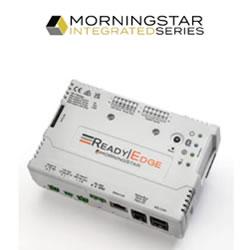
MORNINGSTAR - ReadyEdge
The ReadyEdgeTM (RE-1) accessory is an intelligent system controlling and reporting device meant to make monitoring your solar energy system more transparent. Enabling access to LiveViewTM 2.0 and Morningstar Solar ConnectTM, ReadyEdge provides data from all compatible Morningstar devices in your system. It is designed to be paired with the three ReadyBlock options, up to six total, with the possibility to use multiple ReadyShunts and ReadyRelays. The ReadyEdge is compatible with select Morningstar products.