
Renewable Energy in Mining Market to Reach USD 3.4 Billion by 2032 | Clean Power Revolution
The global Renewable Energy in Mining Market is set to reach USD 3.4 Billion by 2032, growing at 8.4% CAGR, as mining companies adopt solar, wind, and hybrid systems to cut carbon emissions, lower costs, and drive sustainable operations worldwide.
Renewable Energy in Mining Market: How Clean Power is Transforming the Global Mining Sector
More Headlines
- The Complete Guide to Single-Family Home Energy Storage Capacity: Size It Right for Resilience & Savings
- Scanifly and IronRidge Integrate Drone-Based PV Design with Racking Layouts, Eliminating Duplicate Work and Accelerating Project Timelines
- Trina Storage and Aer Sol©ir launch Italy's largest BESS project, kicking off multi-GWh expansion
- Global Flywheel Energy Storage Market to Hit $671 Million by 2035 Amid Clean Energy Surge
- The Energy Transition Market: Powering the World's Clean Energy Future

This surge underscores how mining companies are rethinking energy sourcing not only for environmental reasons but also as a way to secure operational efficiency and cost stability in an era of volatile fossil fuel prices and tightening carbon regulations.
The Clean Energy Imperative in Mining
Mining operations are among the most energy-intensive activities on the planet. From drilling and crushing to ventilation and material transport, energy demands in the sector account for nearly 6% of total global energy consumption, with electricity and diesel as primary sources. Historically, remote mining operations have relied on off-grid diesel generators, leading to high fuel expenses, logistical challenges, and significant carbon emissions.
The Renewable Energy in Mining Market is redefining this paradigm. By integrating solar, wind, hydro, and biomass power systems, miners are achieving both energy independence and emission reduction. Clean energy solutions are now viewed as vital for maintaining license-to-operate, securing investor confidence, and aligning with national decarbonization goals.
Renewable Energy in Mining Market Overview: A Decade of Opportunity
The renewable energy transition in mining is accelerating globally. Between 2023 and 2032, the Renewable Energy in Mining Market is expected to double in size as technology costs continue to fall and policy frameworks strengthen. Mining majors such as BHP, Rio Tinto, Anglo American, and Barrick Gold are leading the shift with ambitious commitments to carbon neutrality and renewable integration.
Recent data reveals that more than 70 mining companies worldwide have now deployed renewable energy systems at some level of operation, with solar PV and wind power leading adoption. Projects such as Gold Fields' Agnew Gold Mine in Australia and Sibanye-Stillwater's solar initiatives in South Africa are serving as models for the industry, proving that renewable integration can deliver both sustainability and profitability.
Key Drivers of the Renewable Energy in Mining Market
1. Decarbonization and ESG Commitments
With growing investor scrutiny around environmental, social, and governance (ESG) performance, mining firms are under immense pressure to reduce their carbon footprints. Governments are implementing stricter emissions targets, and financial institutions increasingly link funding to sustainability metrics. As a result, integrating renewable energy is no longer optional—it is a prerequisite for long-term competitiveness.
2. Volatile Fossil Fuel Prices
Diesel and coal price fluctuations have long plagued the mining sector, creating financial unpredictability. Renewable energy provides a hedge against fossil fuel volatility. Solar and wind power, once installed, offer predictable and stable operational costs, making them attractive in high-inflation energy markets.
3. Falling Costs of Renewable Technologies
Over the past decade, the levelized cost of electricity (LCOE) for solar and wind energy has declined by more than 80% and 60%, respectively. This cost reduction has made renewables the cheapest source of new electricity in most regions, allowing miners to offset initial capital expenditures through long-term savings.
4. Energy Access in Remote Locations
Many mining operations are located far from national grids, relying heavily on diesel imports. Deploying decentralized renewable microgrids and hybrid systems enables energy independence and reduces logistical complexity. Hybrid solar-diesel or solar-wind configurations are now becoming standard practice in remote mining zones across Australia, Africa, and Latin America.
Technology Landscape: Solar Leads, Wind Gains Momentum
Solar Energy in Mining
Solar power currently dominates the Renewable Energy in Mining Market, accounting for the largest share of installations. Photovoltaic systems are modular, scalable, and can be deployed quickly, making them ideal for mining environments with high insolation. Projects in Australia, Chile, and Namibia have demonstrated that solar installations can offset up to 50% of on-site energy consumption, drastically reducing diesel dependency.
Wind Energy Integration
Wind energy is gaining traction, particularly in regions with consistent wind profiles such as Patagonia, Western Australia, and northern Canada. The combination of solar and wind provides complementary generation patterns, ensuring round-the-clock renewable supply when integrated with battery storage systems.
Hydro and Biomass
In regions with abundant water resources, small-scale hydroelectric systems are being used to power mining operations. Biomass energy, though less widespread, is emerging in areas where organic waste is available, particularly in tropical mining zones.
Hybrid Microgrids and Storage Solutions
The integration of battery energy storage systems (BESS) is revolutionizing renewable applications in mining. Lithium-ion batteries and emerging alternatives such as vanadium redox flow batteries enhance reliability by storing excess renewable power for use during peak demand or reduced generation periods. Hybrid microgrids, combining solar, wind, storage, and backup diesel generation, offer an optimized pathway for stable, low-carbon mining operations.
Renewable Energy in Mining Market Regional Insights
Asia-Pacific: The Largest and Fastest-Growing Market
The Asia-Pacific region accounted for over 39% of the global Renewable Energy in Mining Market in 2022 and continues to lead in installed renewable capacity. Australia remains a frontrunner, with mining giants investing heavily in on-site solar and wind facilities. China and India, with massive coal and metal mining industries, are rapidly scaling renewable integration to meet national climate commitments.
North America: Driving Innovation
North America is emerging as an innovation hub, with U.S. and Canadian mining firms deploying advanced AI-driven energy management systems and storage solutions. Government incentives, renewable tax credits, and corporate sustainability mandates are fueling this regional growth.
Europe: Policy-Driven Decarbonization
Europe's mining sector, though smaller in scale, is characterized by strong policy frameworks supporting clean energy adoption. The European Union's Green Deal and decarbonization agenda have prompted a shift toward renewable integration in metal extraction and critical mineral mining.
Latin America and Africa: Untapped Renewable Potential
Chile, Peru, and South Africa are witnessing rapid adoption due to abundant solar and wind resources. In Africa, mining companies are collaborating with renewable developers to co-build infrastructure that benefits both mining operations and nearby communities, creating shared value and improving energy access.
Download Sample Pages of Renewable Energy in Mining Industry Market Report by Acumen Research And Consulting here.
Key Players in the Renewable Energy in Mining Market
Leading companies driving this market transformation include:
- ABB Ltd.
- Siemens AG
- General Electric
- Enel Green Power
- EDF Energies Nouvelles
- Canadian Solar Inc.
- First Solar, Inc.
- Vestas Wind Systems A/S
- Goldwind Science and Technology Co., Ltd.
These players are forming strategic partnerships with mining corporations to deliver turnkey renewable energy solutions that integrate generation, storage, and digital management systems.
Overcoming Challenges: Capital, Infrastructure, and Policy
Despite impressive growth, the Renewable Energy in Mining Market faces key challenges that must be addressed for sustained progress.
High Upfront Investment
Renewable energy systems, especially large-scale solar or wind farms, demand significant initial capital. While operational costs are lower over time, smaller mining firms often struggle to finance such projects without policy incentives or green financing mechanisms.
Infrastructure Limitations
In remote mining regions, limited transmission infrastructure hinders large-scale renewable deployment. Hybrid microgrids and modular systems are emerging as practical solutions, yet logistics and maintenance remain concerns.
Policy Gaps and Regulatory Barriers
The absence of unified renewable energy frameworks for mining sectors in developing countries continues to slow adoption. Clear policy incentives, such as feed-in tariffs and carbon credits, are essential for unlocking investment potential.
Economic and Environmental Impact
The economic case for renewable mining is compelling. Studies indicate that renewable energy integration can reduce mine-site energy costs by up to 30% over a project's lifetime. Simultaneously, transitioning to clean power can lower carbon emissions by 50-80%, depending on energy mix and geographic location.
From an environmental standpoint, renewables help mining companies mitigate scope 1 and 2 emissions while supporting global efforts to limit warming to 1.5°C. Many corporations are now publishing transparent sustainability reports, showcasing measurable progress toward low-carbon mining.
Renewable Energy in Mining Market Outlook: The Path to Sustainable Mining
Looking ahead, the next decade will mark a defining phase for the Renewable Energy in Mining Market. The convergence of clean energy technologies, digitalization, and sustainability imperatives will shape mining's transition from a carbon-intensive industry to a model of green innovation.
Emerging trends likely to shape the future include:
- Hydrogen-powered mining equipment to replace diesel fleets.
- AI-based energy management systems for optimizing microgrid performance.
- Circular economy models that recycle waste heat and materials for on-site energy production.
- Partnerships between renewable developers and mining companies to create shared renewable infrastructure hubs.
By 2032, renewable-powered mines could become standard practice rather than an exception. The mining industry's adoption of clean energy will not only reduce environmental impact but also drive global demand for critical minerals essential for renewable technologies themselves — from lithium and nickel to rare earth elements.
The Renewable Energy in Mining Market is redefining the future of mining by aligning profitability with sustainability. What was once an industry synonymous with high emissions and fossil fuel dependence is now becoming a testing ground for energy innovation and climate leadership. As renewable technologies continue to advance and policy support strengthens, clean energy integration in mining will emerge as one of the most powerful levers of industrial decarbonization in the coming decade.
For mining companies, investors, and policymakers alike, the message is clear: the future of mining is renewable, resilient, and responsible.
Featured Product
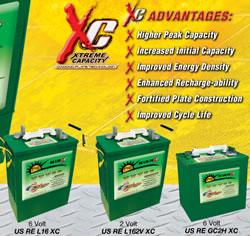
U.S. BATTERY RENEWABLE ENERGY SERIES DEEP CYCLE BATTERIES
Our RE Series batteries are designed to provide the highest peak capacity, longest cycle life, and greatest reliability for use in industrial or residential renewable energy applications. Renewable Energy Series batteries utilize the company's exclusive XC2™ formulation and Diamond Plate Technology® to create the industry's most efficient battery plates, delivering greater watt-hours per liter and watt-hours per kilogram than any other flooded lead-acid battery in the market. Our Deep Cycle batteries are engineered to work with solar panels as well as other renewable energy applications.