
Renewable Energy Market Growth, Trends, and Future Outlook 2032
The Renewable Energy Market continues to expand with advancements in solar, wind, and storage technologies. Supportive government policies and rising sustainability goals are driving investments, shaping the global transition toward affordable and clean energy solutions.
Renewable Energy Market: Growth, Trends, Statistics, and Future Outlook
More Headlines
- North American Residential Energy Storage Market Booms: How to Seize Policy Dividends with ESS?
- Rooftop Solar PV Market Accelerates as Demand for Clean Power Rises Worldwide
- Clean Energy Market Growth Analysis: Wind, Solar, Hydropower, Geothermal and Regional Trends
- Global Solar Tracker Market Report 2030 - Size, CAGR, Leading Players & Regional Insights
- Energy Storage as a Service Market Size, Growth Opportunities, and Future Forecast to 2032

The Renewable Energy Market continues to experience significant global expansion as nations pursue sustainability, energy security, and decarbonization goals. Fueled by technological improvements, strong government regulations, and increasing investment in clean energy infrastructure, the renewable energy market is on track for remarkable growth through 2032 and beyond. According to Acumen Research and Consulting, the global renewable energy market revenue reached USD 1.24 trillion in 2023 and is forecast to grow to USD 2.68 trillion by 2032 at a CAGR of 9.1% from 2024 to 2032.
In this comprehensive article, we explore key dimensions of the renewable energy market including its definition, growth drivers, regional dynamics, major players, policy support, and critical statistics shaping its trajectory.
What is Renewable Energy?
Renewable energy refers to energy derived from natural sources that are continuously replenished, including sunlight, wind, water, geothermal heat, and biomass. Unlike fossil fuels, renewable energy resources do not deplete over time and emit significantly fewer greenhouse gases, making them central to global efforts to mitigate climate change.
Common renewable energy types include:
• Solar Energy - Harnesses sunlight through photovoltaic (PV) systems and concentrated solar power.
• Wind Power - Uses wind turbines to generate electricity.
• Hydroelectric Power - Produces power from flowing water.
• Biomass Energy - Converts organic materials into energy.
• Geothermal Energy - Harnesses subsurface heat.
• Ocean Energy - Includes tidal and wave energy.
Renewable energy is essential to global energy transformation because it supports cleaner power generation, enhances energy independence, and drives the transition toward a sustainable low-carbon economy.
Market Growth Potential & Benefits
Robust Market Growth
The renewable energy market's projected growth underscores the robust demand trajectory worldwide. The sector's market size is expected to more than double from USD 1.24 trillion in 2023 to USD 2.68 trillion by 2032, driven by investment and policy shifts encouraging cleaner energy adoption.
Investment continues to pour into solar and wind infrastructure, grid modernization, and energy storage solutions — critical enablers of renewable deployment.
Benefits Driving Market Adoption
The renewable energy market is experiencing rapid growth due to several key benefits:
1. Environmental Sustainability: Renewable energy reduces carbon emissions and dependence on fossil fuels, supporting climate goals.
2. Energy Security: Countries with limited fossil fuel resources can increase energy independence with renewables.
3. Economic Growth: Renewable projects generate jobs, stimulate local economies, and foster innovation in clean technology.
4. Lower Long-Term Costs: While initial capital costs are high, operational costs of renewables are comparatively lower over time.
5. Grid Resilience: Integration of energy storage and distributed generation enhances grid reliability.
Together, these benefits create a strong value proposition for governments, utilities, and private investors, reinforcing the renewable energy market's expansion.
Key Market Statistics & Segmentation
Market Size & Forecast
• Total Market Value (2023): USD 1.24 trillion
• Projected Value (2032): USD 2.68 trillion
• CAGR (2024-2032): 9.1%
The report also highlights regional contributions with Asia-Pacific representing a major share (USD 496.4 billion in 2023) and North America posting above-average growth.
Segment Insights
• Energy Type: Solar energy emerged as the highest revenue-generating segment with approximately USD 397.1 billion in 2023 due to widespread deployment and declining technology costs.
• Application: The Industrial segment accounted for the largest share in 2023 as companies increasingly adopt clean energy to reduce carbon footprints and operating costs.
Leading Regional Markets
Asia-Pacific: Market Leader
The Asia-Pacific renewable energy market continues its leadership, driven by massive installations in China, India, and Southeast Asian nations. A combination of resource availability, industrial demand, and supportive government policies has positioned the region as the largest renewable energy market globally.
China, in particular, remains a dominant force in manufacturing renewable energy components and generating capacity, contributing significantly to global solar and wind growth. Recent renewable generation figures show that wind and solar together have begun to outpace coal generation in several major markets, including China and India.
India also recorded historic renewable capacity additions, adding 25 GW in the first half of FY26, a record, with solar accounting for the lion's share.
North America: Fastest Growth Rates
While Asia-Pacific leads by market share, North America — particularly the United States — is projected to exhibit high growth rates due to ongoing investments in clean energy infrastructure, including wind and solar, and supportive legislative frameworks such as tax incentives and climate-focused spending bills.
Europe and Latin America
Europe remains a vital renewable energy region with strong policy incentives, including carbon pricing and renewable portfolio standards. Latin America is also gaining momentum, particularly in countries like Brazil and Mexico, which benefit from abundant hydropower and emerging wind and solar markets.
Major Market Players & Recent Developments
The renewable energy industry features a diverse mix of global and regional players spanning equipment manufacturing, project development, and service support. Key companies include:
• Ørsted - A leader in offshore wind development with projects advancing clean power infrastructure globally.
• Vestas - Major wind turbine manufacturer driving turbine innovation and deployment.
• Yingli Solar and Canadian Solar Inc. - Large photovoltaic manufacturers contributing to global solar capacity growth.
• Enel Group - Integrated renewable energy company investing across solar, wind, and storage platforms.
• NextEra Energy, Inc. - A leading utility-scale renewable operator in North America.
• Siemens Gamesa and ABB - Engineering firms advancing renewable power systems and grid integration technologies.
• TATA Power - Key player in India's renewable expansion.
Recent developments include expansion of wind capacity contracts, solar power plant commissioning, and investments in energy storage technology. Additionally, battery energy storage systems — critical to managing the intermittent nature of renewables — are increasingly large markets themselves, projected to grow substantially by 2035.
Government Investments & Favorable Policies
Government support through subsidies, tax incentives, and targeted renewable mandates continues to be a cornerstone of the renewable energy market's growth:
• United States: Federal incentives like production tax credits and investment tax credits, along with clean energy spending bills, are accelerating deployment.
• Asia: China continues strategic investment in solar, wind, and energy storage manufacturing, supported by national climate objectives.
• Japan: Government actions include substantial clean energy investment subsidies to support industrial decarbonization, a part of broader GX strategies.
• Europe: Progressive policies such as renewable energy targets under the European Green Deal drive national programs supporting wind and solar.
These policy frameworks help lower costs, incentivize private investment, and promote technological innovation across the renewable energy market.
Challenges & Opportunities
Despite its robust growth, the renewable energy market faces several challenges:
• High initial investment costs for infrastructure and integration.
• Intermittency issues associated with solar and wind resources.
• Grid infrastructure limitations in emerging economies.
However, opportunities abound:
• Scale-up of energy storage technologies provides grid stability and enables higher renewable penetration.
• Emerging markets in Latin America and Africa offer untapped potential.
• Digital and AI integration increases efficiency and optimization in renewable systems.
Future Outlook
With global momentum behind the energy transition, the renewable energy market is poised for sustained expansion. Technological improvements such as next-generation solar cells, enhanced storage solutions, and smart grid integration will further unlock growth potential.
In coming years, the cumulative impact of government policies, corporate sustainability commitments, and rising consumer demand for clean energy will shape the evolution of the renewable energy market.
The renewable energy market stands at the forefront of global efforts to achieve a sustainable and low-carbon energy future. With strong growth projections, robust investment trends, and expanding regional adoption, the market is witnessing a transformative phase. From Asia-Pacific's leadership to the rapid development in North America and Europe, renewable energy continues to redefine the global energy landscape.
By leveraging innovation, comprehensive policy frameworks, and strategic investments, the renewable energy market is set to deliver long-term economic and environmental benefits, while contributing meaningfully to climate goals and energy security worldwide.
For deeper insights, detailed forecasts, and segmentation analysis, request comprehensive Sample Pages of Renewable Energy Market Report from Acumen Research And Consulting now.
Featured Product
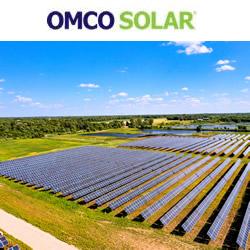
OMCO Origin® Factory-Direct Trackers
A One-In-Portrait (1P) solution that support a wide range of solar projects (utility scale, distributed generation (DG), & C&I markets). Manufactured and factory preassembled in the USA at one of OMCO Solar's 5 US plants (AZ, IN, AL, OH), OMCO makes all structural components with domestic steel and now can offer a 100% domestic tracker. OMCO Origin® Factory-Direct Trackers include universal module mounts with options for all commercially available modules, labor-saving bearings with 6 adjustable ways to compensate for posts and terrain issues, and foundation solutions for every terrain including OMCO C Piles.