DC Fast Charging Stations Market Driven by Ultra-Fast EV Charging Demand
The DC fast charging stations industry is projected to grow from $4.3 billion in 2022 to $121.5 billion by 2032, driven by rapid EV adoption, expanding public charging networks, and advances in energy-efficient fast-charging technologies.
According to a new report published by Allied Market Research, the DC fast charging stations market share was valued at $4.3 billion in 2022 and is projected to reach a remarkable $121.5 billion by 2032, growing at a robust CAGR of 40.2% from 2023 to 2032. This exponential growth reflects the rapid adoption of electric vehicles (EVs), strong government support for clean transportation, and rising investments in fast-charging infrastructure worldwide.
More Headlines
- EV Battery Reuse Market Set for Rapid Expansion Driven by Electric Mobility & Energy Storage Demand
- UL Solutions Debuts Testing and Certification Framework for Safer Plug-In Solar Across the United States
- BLUETTI, Texas Instruments, Covestro, and Leave No Trace Join Forces at CES 2026 to Advance Inclusive, Sustainable Energy Solutions
- U.S. Solar Battery Market to Witness Steady Growth Driven by Renewable Energy Adoption
- GameChange Solar Leads Research Upending the Current Understanding of Hail Storm Mitigation Strategies for Trackers

Understanding DC Fast Charging Stations
A DC fast charging station is an advanced public charging solution designed to deliver rapid charging for electric vehicles. Unlike conventional AC chargers, which convert alternating current (AC) to direct current (DC) inside the vehicle, DC fast charging stations perform this conversion externally. As a result, DC power is delivered directly to the EV battery, enabling significantly faster charging times.
These stations are especially critical for long-distance travel and urban environments where home charging access is limited. By drastically reducing charging duration, DC fast chargers help overcome range anxiety—one of the major barriers to EV adoption—making them an essential component of modern EV infrastructure.
By Region
Region-wise, the DC fast charging stations market is analyzed across North America, Europe, Asia-Pacific, and Latin America.
Europe held the highest market share in 2022 due to strong EV adoption policies and robust charging networks. However, Asia-Pacific is projected to maintain its dominance during the forecast period, supported by large-scale investments, urbanization, and aggressive EV deployment in China and other emerging economies.
Key Growth Drivers of the DC Fast Charging Stations Market
One of the primary growth drivers of the DC fast charging stations market is the rapid global expansion of publicly accessible fast chargers, particularly along highways and motorways. These strategically placed chargers ensure uninterrupted long-distance EV travel and enhance consumer confidence in electric mobility.
In 2022 alone, the global fast charger network expanded by approximately 330,000 units, with China accounting for nearly 90% of this growth. China's aggressive EV deployment strategy, combined with limited access to home charging in densely populated cities, has significantly accelerated the adoption of DC fast charging stations.
Europe has also emerged as a strong growth region, recording a 55% increase in fast charger installations. Countries such as Germany, France, and Norway are leading the region's transition to electric mobility through favorable policies, subsidies, and infrastructure investments. Meanwhile, the U.S. added around 6,300 fast chargers in 2022, primarily driven by the expansion of Tesla Superchargers, reflecting strong momentum in North America.
Government initiatives promoting alternative fuels infrastructure, carbon emission reduction targets, and zero-emission vehicle mandates continue to fuel demand for fast charging solutions, strengthening the long-term outlook of the DC fast charging stations market.
Technological Advancements and Market Developments
Ongoing technological innovation plays a vital role in shaping the DC fast charging stations market. Manufacturers and network operators are increasingly focusing on ultra-fast charging solutions that enhance power delivery while optimizing grid efficiency.
For instance, in February 2023, FLO—a leading EV charging network operator in North America—launched FLO Ultra, an ultra-fast DC charger designed to deliver intelligent energy management, forward-looking performance, and a superior user experience. Such innovations highlight the industry's commitment to reducing charging times and improving system efficiency.
The integration of smart charging technologies, load balancing, and renewable energy sources is further enhancing the reliability and sustainability of DC fast charging infrastructure.
Emerging Opportunities in Energy-Efficient Charging
The growing emphasis on energy efficiency presents significant opportunities for the DC fast charging stations market. Currently, fast chargers require substantial electrical power, leading to high operational costs and environmental concerns. To address this, the industry is shifting toward energy-efficient charging technologies that minimize power losses and optimize energy consumption.
Advancements such as high-efficiency power electronics, smart energy management systems, and integration with renewable energy sources are transforming DC fast charging into a more sustainable solution. These developments not only reduce operational costs but also align with global clean energy goals.
As sustainability becomes a core focus for governments and consumers alike, energy-efficient DC fast charging stations are expected to witness increased adoption, unlocking new growth avenues for the market.
Market Restraints Limiting Growth
Despite strong growth prospects, the DC fast charging stations market faces certain challenges. One of the major restraints is the lack of a clearly defined regulatory framework governing consumer data protection. Smart chargers and connected charging networks collect large volumes of user data, including location, charging behavior, and payment information.
In the absence of comprehensive data protection regulations within EV policies, consumer privacy may be at risk. Unauthorized access, data misuse, and cybersecurity threats could hinder consumer trust and slow market adoption. Establishing robust regulatory standards for data security and privacy is essential for the responsible growth of the DC fast charging ecosystem.
Additionally, high installation and grid upgrade costs associated with DC fast charging stations can pose financial challenges, particularly in developing regions with limited power infrastructure.
Segmentation Overview
The DC fast charging stations market share is segmented by type, application, and region, providing a comprehensive view of market dynamics.
By Type
The Combined Charging System (CCS) segment dominated the market in 2022 and is expected to witness the fastest growth, driven by widespread adoption across Europe and North America and compatibility with multiple EV models.
By Application
The passenger vehicle segment emerged as the leading contributor in 2022 and is anticipated to remain the fastest-growing segment. Rising EV ownership, government incentives, and expanding public charging infrastructure are fueling this trend.
Competitive Landscape
The DC fast charging stations market is highly competitive, with key players focusing on network expansion, technological innovation, and strategic partnerships. Major companies operating in the market include Tesla, Allego B.V., Fortum, Enel X Way S.r.l., Siemens, ABB, Schneider Electric, ChargePoint, Inc., Eaton Corporation Plc, and Lincoln Electric Holdings.
These players are investing heavily in ultra-fast charging technologies, smart energy management systems, and scalable infrastructure to meet the rapidly growing demand for EV charging solutions.
Conclusion
The DC fast charging stations market is undergoing unprecedented expansion, driven by accelerating EV adoption, supportive government policies, and technological advancements. While data security concerns pose challenges, innovations in energy efficiency and smart charging are unlocking new growth opportunities. As the world transitions toward sustainable transportation, DC fast charging stations will remain a cornerstone of the global EV ecosystem.
Featured Product
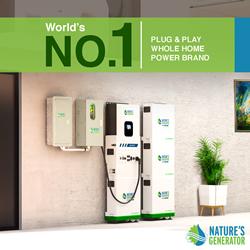
Nature's Generator MyGrid 10K
A 10,000W plug & play whole-home generator with a 10kWh LiFePO4 battery for reliable backup power. Features easy setup, flexible 120V/208-240V input, and solar/wind charging. Expandable with extra batteries or solar panels, and can pair two units for 20,000W for even larger energy needs. Powers your home during power outages, reduces electricity costs, and supports sustainable energy.